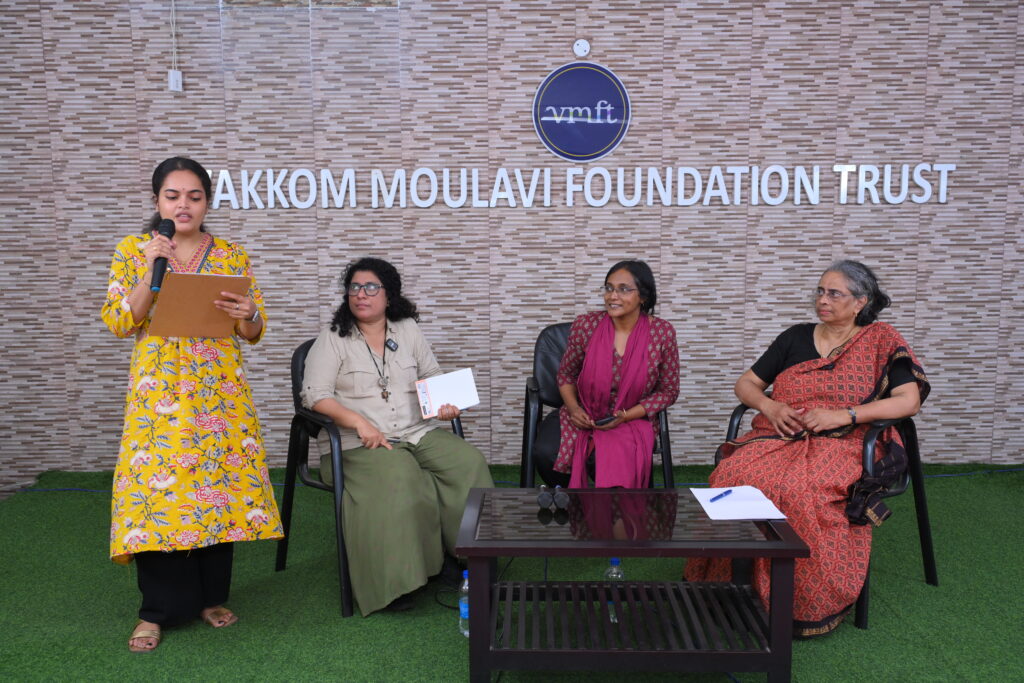
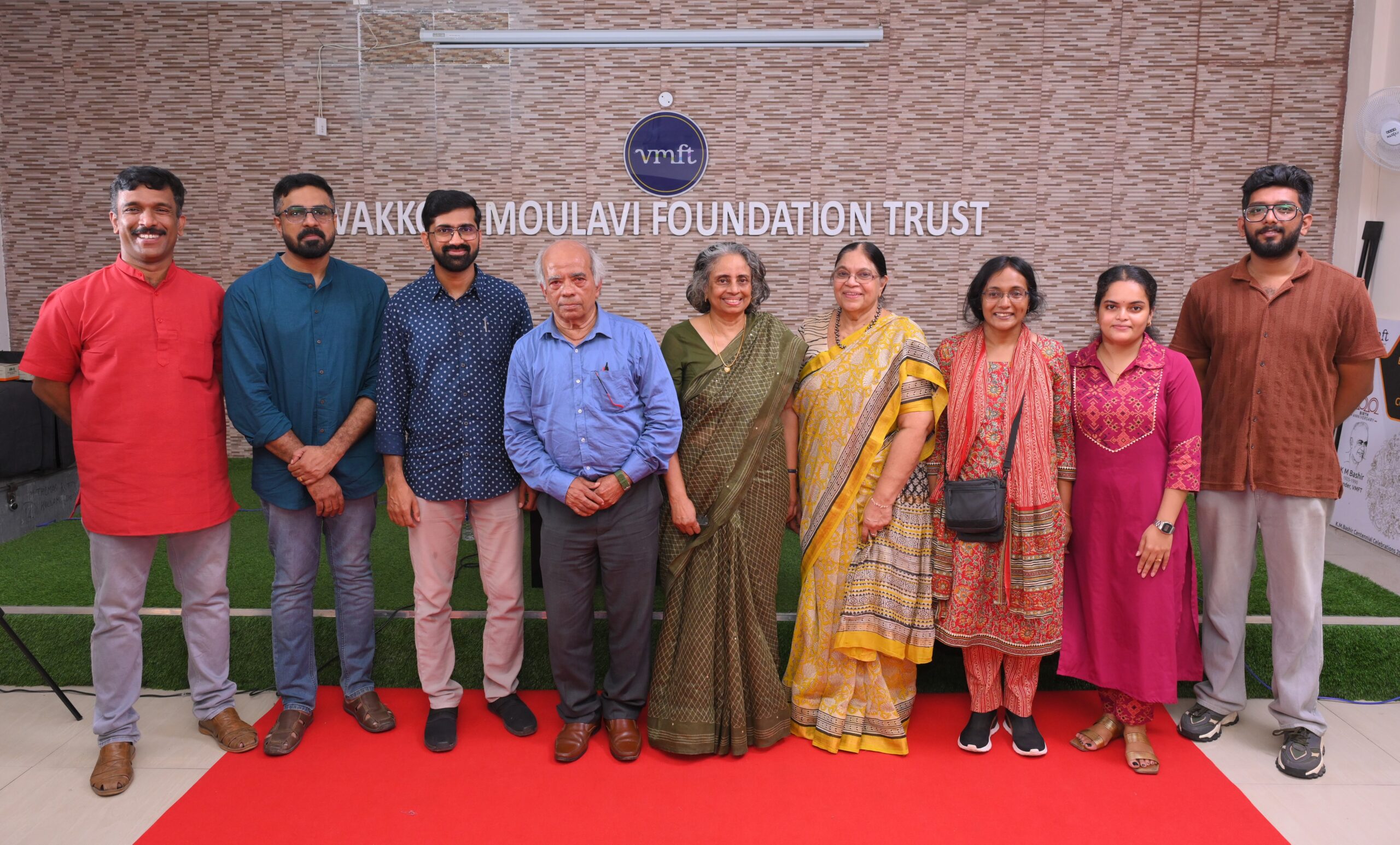
We launched our new discussion series with a timely and layered conversation on how Artificial Intelligence is reshaping Malayalam digital spaces. Titled Social Media and Progressive Thought in Kerala, the series seeks to examine how Kerala’s public sphere is evolving in an era defined by platforms, algorithms and rapidly shifting media cultures.
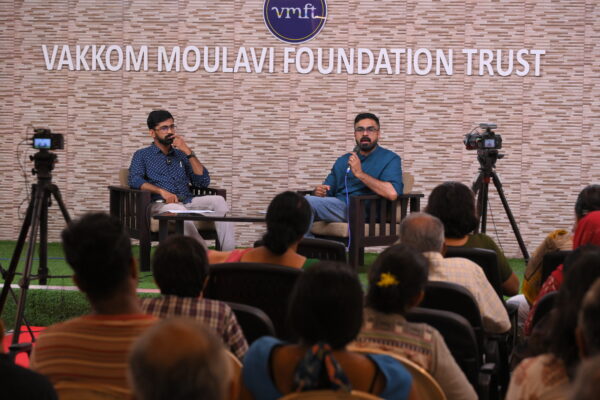
The opening session, AI and Malayalam Social Media: Opportunities and Perils, set the tone for this larger inquiry. The discussion featured Dr. Vaisakhan Thampi, science communicator and YouTuber, and Arun Ravi, entrepreneur and technology and management consultant. Together, they unpacked how AI is influencing public discourse, cultural production and civic engagement in Malayalam.
A Series Framed by Public Reason
The discussion series is anchored in a larger question. How can Kerala’s long tradition of progressive, rational and secular public debate be sustained and reimagined in the digital age? Social media platforms are no longer peripheral communication tools. They shape visibility, influence opinion and determine which voices travel farthest.
By situating AI within this broader conversation on progressive thought, the series aims to move beyond technological excitement and toward critical reflection on power, access and responsibility.
Transforming Malayalam Digital Content
A central theme of the session was the transformation of Malayalam content production. AI tools are increasingly used for writing assistance, translation, subtitling, voice generation and content amplification. This has expanded possibilities for creators, especially those seeking to reach wider or multilingual audiences.
The speakers noted that AI can lower barriers to entry. Smaller creators can experiment with formats that were previously resource intensive. Archival material can be made searchable and accessible. Dialects and regional expressions can gain renewed visibility in digital formats.
At the same time, the speed and scale enabled by AI raise questions about authenticity, accuracy and creative ownership. The conversation emphasised that technological adoption must be accompanied by editorial judgment and ethical awareness.
Platform Capitalism and Language
The discussion also turned to the structure of the platforms that host Malayalam content. Algorithms privilege certain kinds of engagement and often reward sensationalism or polarising narratives. Language visibility is shaped not only by creativity but by commercial logics embedded in platform design.
In this environment, Malayalam competes within a global attention economy dominated by English and Hindi content. The speakers explored how algorithmic systems can marginalise smaller linguistic communities unless deliberate efforts are made to strengthen local content ecosystems.
This led to a broader reflection on autonomy. When public conversation migrates to corporate platforms, questions arise about who controls distribution, moderation and monetisation. Malayalam digital culture is therefore not only a linguistic space but also an economic and political one.
The Politics of AI
A recurring insight from the session was that AI systems are not neutral. They are trained on data, shaped by corporate priorities and embedded in specific social contexts. Bias, representation and access all matter. The politics of technology emerged as a key thread. Who benefits from AI driven visibility? Whose language varieties are recognised by models? Which narratives are amplified or suppressed? These questions extend beyond technical design into governance and regulation.
The conversation urged participants to view AI not as an external force acting upon society, but as a set of systems that reflect and reinforce existing inequalities unless consciously redirected.
Safeguarding the Digital Public Sphere
Kerala has a long history of public debate rooted in reform movements, print culture and participatory politics. The speakers reflected on how this legacy can be carried into digital spaces without losing its core values. Participants discussed the importance of rational discourse, secular commitments and democratic engagement in online environments that often incentivise speed over substance. The challenge is not to resist technological change, but to shape it in ways that sustain civic culture.
Collaboration emerged as a practical theme. Academics, technologists, media practitioners and citizens must work together to build a digital sphere that is inclusive, accountable and linguistically vibrant.
Youtube links:
AI and Malayalam Social Media Opportunities and Perils Part 1
https://www.youtube.com/watch?v=uFAIcWif8UI&t=11s
AI and Malayalam Social Media Opportunities and Perils Part 2
https://www.youtube.com/watch?v=-nh_As5AU-Y&t=23s
Looking Ahead
The opening session successfully set the intellectual direction for the VMFT Discussion Series. By placing AI within the wider frame of Malayalam public life, the conversation moved beyond hype and anxiety toward thoughtful engagement.
As the series continues, it promises to deepen this exploration of how social media and emerging technologies intersect with Kerala’s progressive traditions. The questions raised in the first talk are unlikely to have simple answers, but they mark an important starting point for sustained public dialogue.