Kerala is often held up as India’s education success story. A region once marked by rigid caste divisions, gender gaps and low incomes managed to universalize elementary education by the 1960s and secondary education by the 1980s. Participation in higher education expanded rapidly, eventually covering more than 40 percent of the relevant age group.
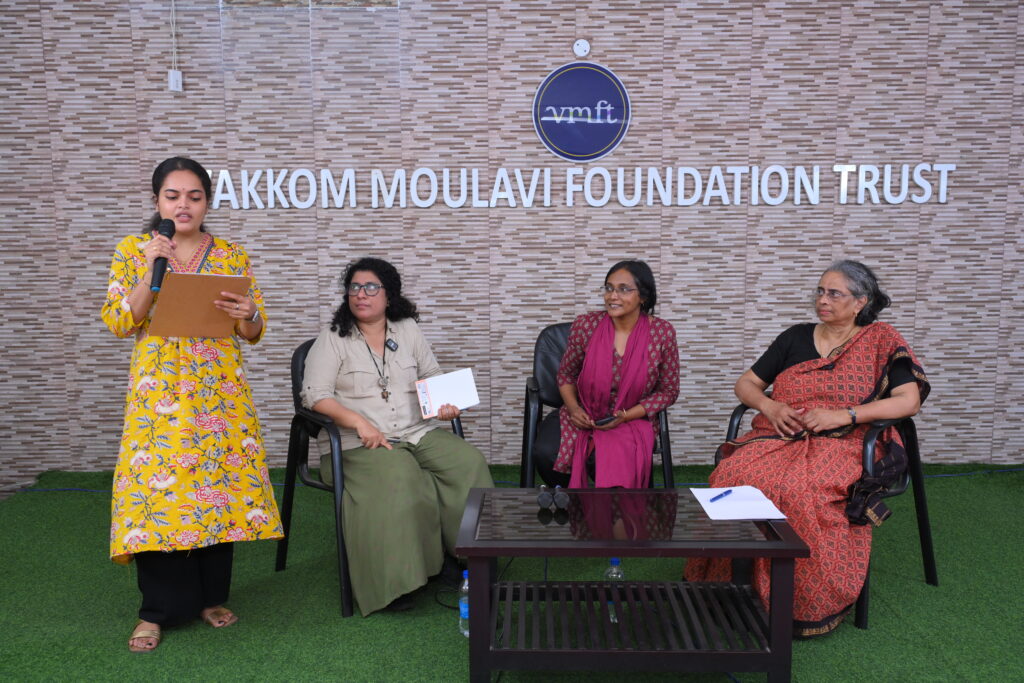
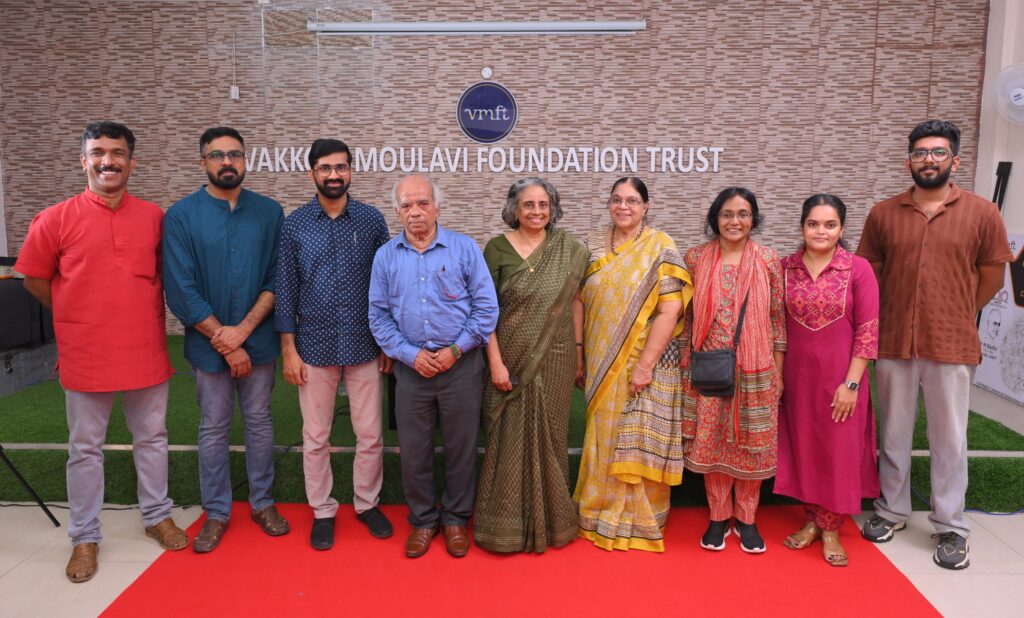
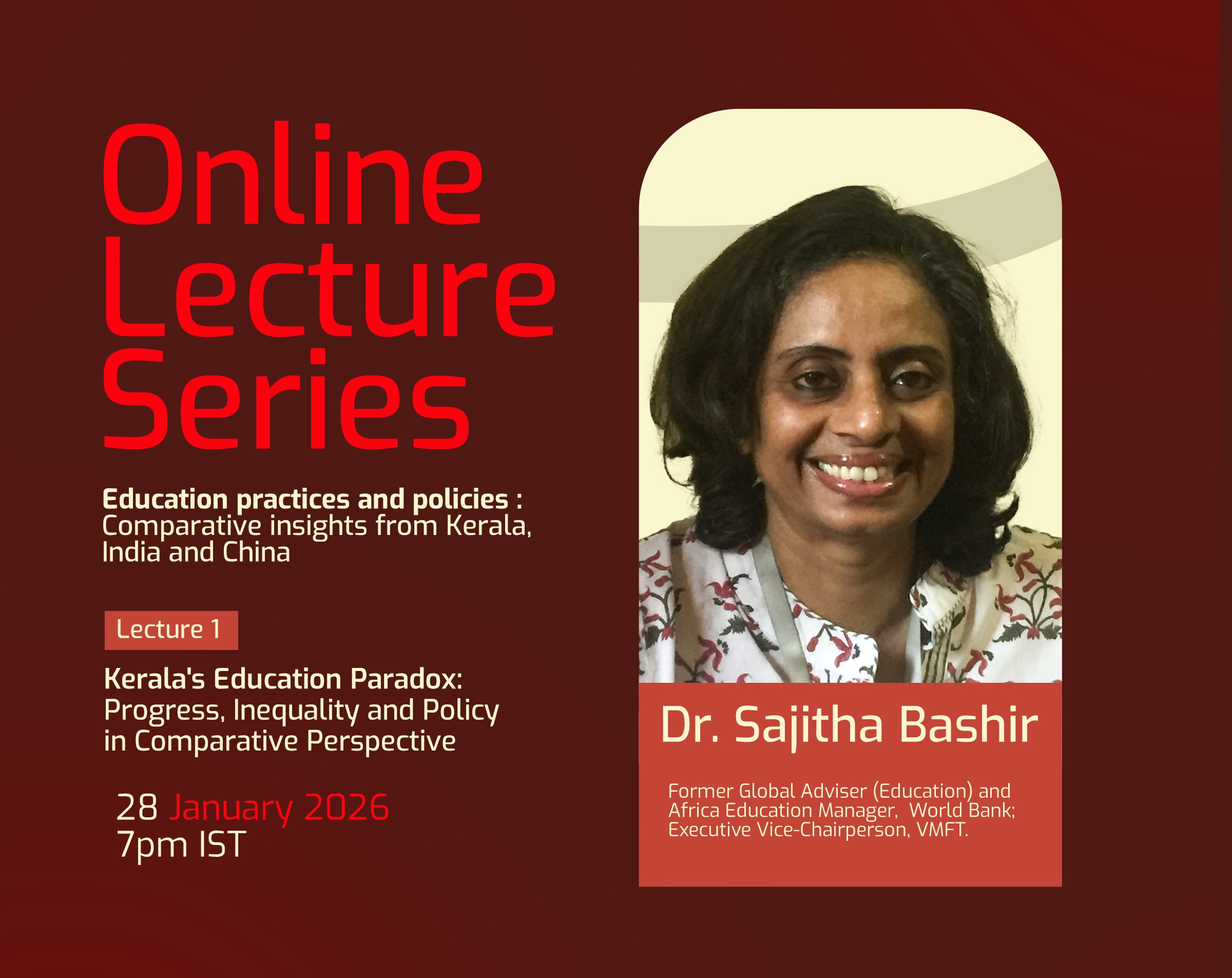
At the Online Lecture Series hosted by Mahatma Gandhi University and VMFT, Dr. Sajitha Bashir, Executive Vice-Chairperson VMFT, Former World Bank Education Manager and Adviser, examined why this early success has not translated into consistent improvements in quality and equity of outcomes. Kerala’s trajectory, she argued, is both remarkable and cautionary.
Historical Foundations of Access
Kerala’s educational expansion was rooted in public action. Princely state investments, missionary initiatives and powerful social reform movements led by figures such as Sree Narayana Guru and Ayyankali helped establish education as a means of dignity and social mobility.
After Independence, a broad political consensus treated schooling as a right. The state committed to neighbourhood schools, publicly funded teachers and mother tongue instruction. Education was valued as a public good central to equity and citizenship.
An International Outlier
Kerala achieved universal schooling at income levels far below countries such as Finland and South Korea. Expansion preceded sustained economic growth. This aligns closely with Amartya Sen’s capability approach, where education expands freedoms and social participation. It fits less neatly with Theodore Schultz’s human capital theory, which links education directly to productivity and growth. Kerala’s economic acceleration came later, driven largely by migration and remittances rather than by domestic innovation. Over time, however, families increasingly began to view education through a human capital lens, prioritising English and credentials linked to global labour markets.
Differentiation Within the System
Since the mid-1990s, Kerala’s school system has become more segmented. Private unaided schools have grown. Multiple curricula coexist. English medium enrolment has expanded sharply across management types.
Wealthier students are concentrated in English medium and unaided schools, while underprivileged students are more likely to attend Malayalam medium government schools. What was once closer to a common school experience has become differentiated by language, curriculum and management. Policy responses to this fragmentation have been tentative, with limited coherence across regulation, teacher preparation and curriculum alignment.
Learning and Inequality
High enrolment has not guaranteed strong learning outcomes. ASER 2018 data showed that many children in early grades struggled with basic reading tasks. Government school students performed worse than those in unaided schools.
Inequality reappears in higher education. Students from disadvantaged schooling backgrounds are more likely to enter general arts streams, while wealthier students dominate professional and postgraduate programmes. Participation remains high, but pathways and returns differ.
The Missing Institutional Depth
A central concern in the lecture was the limited evolution of professional and pedagogical frameworks. While Kerala expanded access impressively, reforms in curriculum coherence, assessment design and teacher professional development did not deepen at the same pace.
Teacher education retained bureaucratic features, and reform initiatives often remained project based rather than embedded in a sustained culture of inquiry. As differentiation increased, the absence of a clear strategy to manage segmentation further complicated efforts to ensure equity in quality.
Kerala’s education story is not one of failure. It remains ahead of most Indian states in schooling participation and social commitment to education. Yet its experience shows that development in education is not linear. Universal access can be achieved early, but equity in outcomes and quality require continuous institutional strengthening.
Kerala demonstrates that social mobilisation and public policy can overcome historical disadvantage. It also reminds us that without coherence in curriculum, teacher knowledge and system capacity, the transformative promise of education remains unfinished.
Conclusion
In closing her lecture, Dr. Sajitha Bashir returned to the central question of the evening. How does a state that achieved near universal schooling so early struggle to convert that into uniformly high quality and equitable outcomes? Her answer was neither dismissive nor celebratory. Kerala’s experience, she argued, shows that educational progress is not automatic or self-sustaining.
The talk left the audience with a clear takeaway. Access was Kerala’s historic achievement. The unfinished task lies in strengthening the deeper architecture of quality, coherence and professional capacity. As Dr. Bashir emphasised, the next leap will not come from expanding enrolment, but from rethinking how curriculum, pedagogy, assessment and policy align in a fragmented system. Kerala’s story remains powerful, but its future depends on how it responds to this paradox.