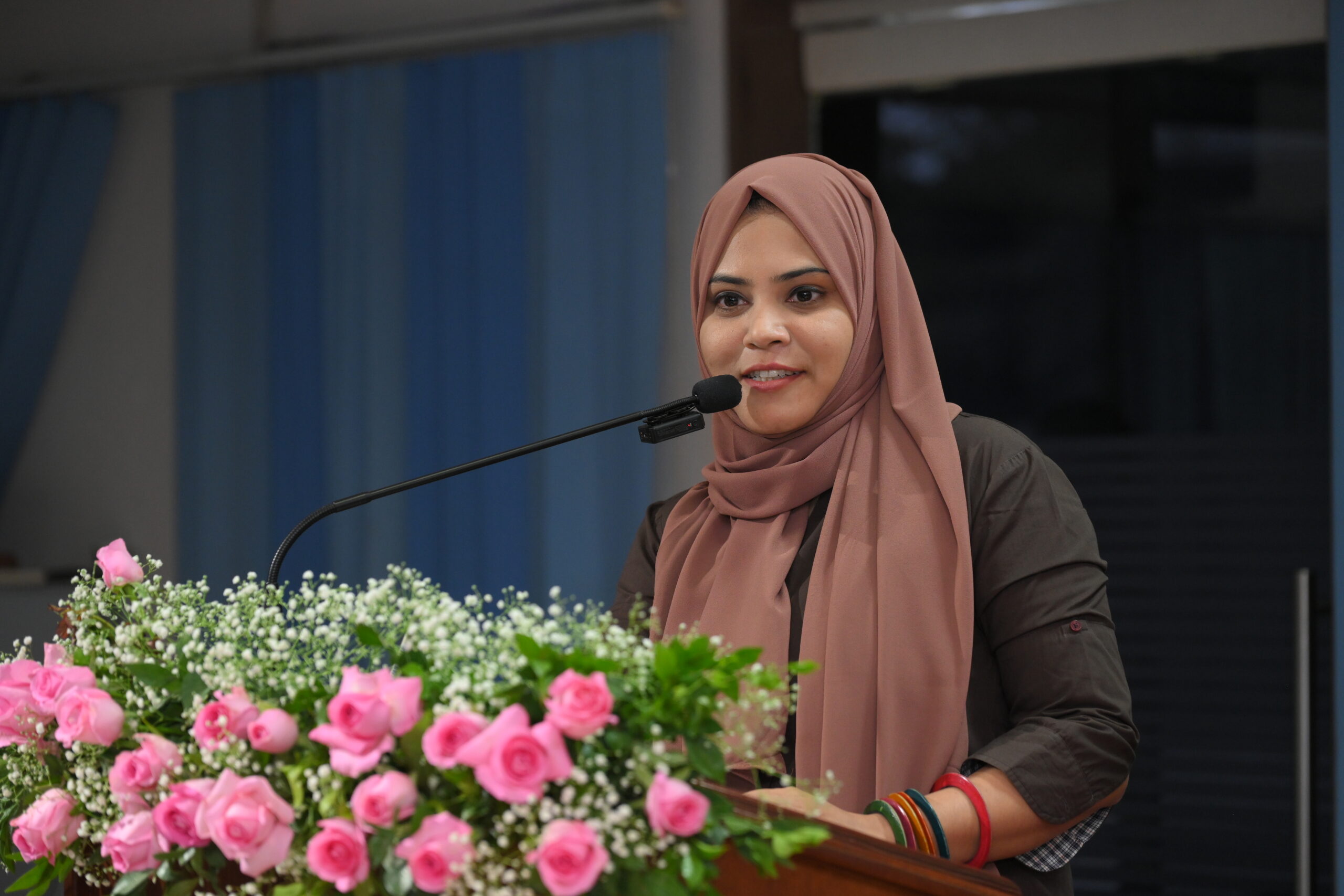
What does it mean to serve in a constitutional democracy? For Adv. Fathima Thahiliya, Member of the Kerala Legislative Assembly, the answer lies not simply in winning an election or holding public office, but in how the power entrusted to an elected representative is exercised.
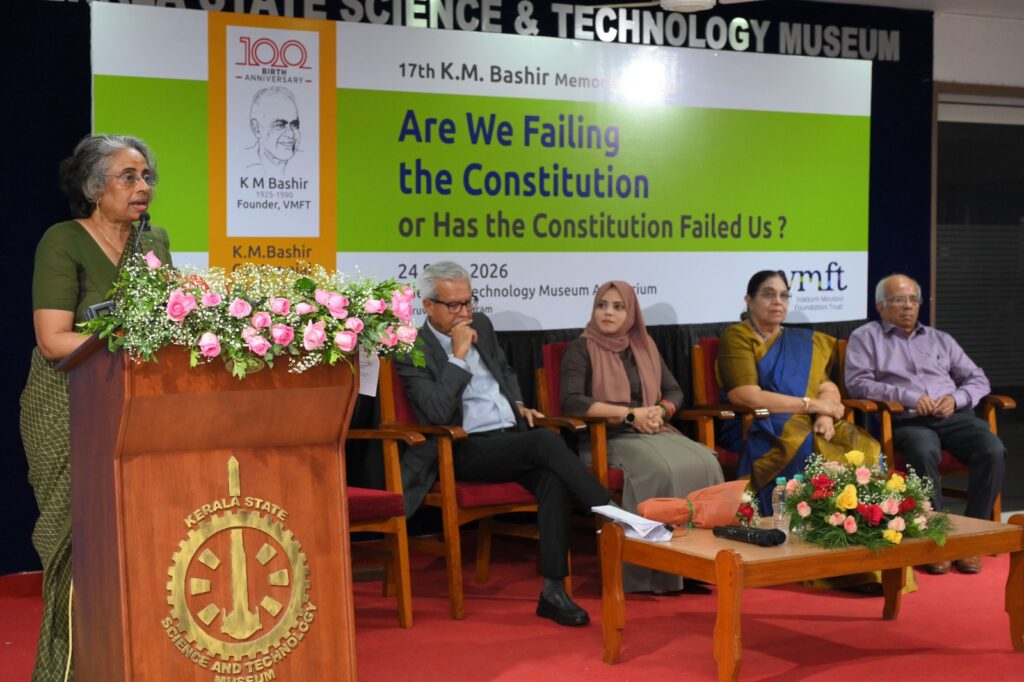
Delivering the special address at the 17th K. M. Bashir Memorial Lecture, held as part of the centenary celebrations of K. M. Bashir, Fathima brought the perspective of a lawyer and a first-time legislator to the theme, “Are We Failing the Constitution or Has the Constitution Failed Us?” She focused on the responsibilities, choices and dilemmas that come with elected office, and the need to translate constitutional principles into everyday governance.
Drawing on her recent experience in the Assembly, she spoke about the distance that can exist between the Constitution as written and the Constitution as people experience it. For someone denied equal treatment, afraid to speak up, or unable to access a public service without influence, the promises of equality, liberty and justice can seem far removed from reality. The question, she argued, is not one to be answered through slogans, but by examining why this distance persists.
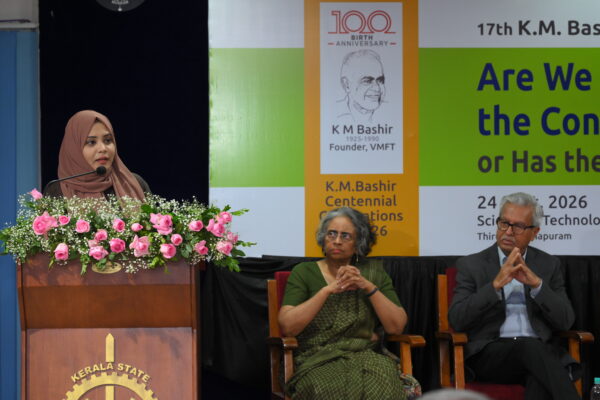
This examination begins with understanding the people an elected representative is accountable to. An electoral mandate does not make a legislator answerable only to those who voted for them. The responsibility extends to the entire constituency, including political opponents, critics, those who supported another candidate and those who could not vote. Every person must be able to approach their representative and expect a fair hearing.
Fathima highlighted the difficult choices that can arise in public life. What happens when a project supported by a legislator threatens the livelihood of a few families? Will they listen to those affected before taking a position? If a policy they have backed causes harm, are they willing to reconsider it? Such situations test whether political commitments leave room for a genuine engagement with people’s concerns.
She also addressed the relationship between an electoral mandate and constitutional principles. A mandate gives those elected the authority to act; the Constitution sets the limits within which that authority must be exercised. Referring to the Supreme Court’s judgment in Kesavananda Bharati v. State of Kerala, she pointed to the basic structure doctrine as a reminder that even a large electoral majority cannot exercise unlimited power. The rights and dignity of those who disagree with the government do not disappear once votes are counted.
Secularism, she added, must also find expression in the conduct of public institutions. Government must serve people across faiths with equal concern. The identity of a person seeking assistance should never determine how seriously their request is treated.
Fathima further emphasised that public accountability does not begin and end with elections. Between elections, those in office must remain accessible, take people’s concerns to the legislature, follow up with institutions, explain their decisions, acknowledge what they cannot achieve and accept criticism. Citizens must be able to question authority, and those in power must be willing to listen, even when the criticism is uncomfortable.
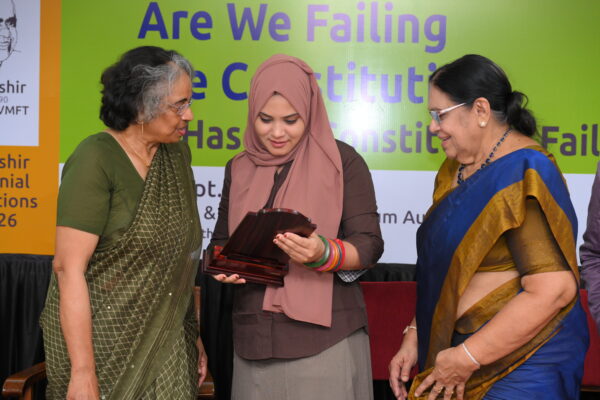
Her address connected closely with VMFT’s engagement with questions of governance, social justice and democratic participation. The Foundation’s emphasis on critical inquiry and public dialogue provides a space to examine how constitutional ideals can move beyond principle and shape the institutions and decisions that affect people’s lives.
In conclusion, Fathima returned to the responsibility that comes with public office. When constitutional promises do not reach people, those entrusted with power must ask what they have failed to do, listen to the answers and act. Political positions are temporary, she reminded fellow legislators, but the responsibility to serve society endures.
The measure of public office, ultimately, is not just the mandate received, but how that mandate is used to uphold the rights and dignity of everyone.
Watch the full event here: https://youtu.be/i21BtmdRrtI?si=PaL7pndQ3XeMZx50
Speech by Adv. Fathima Thahiliya: https://youtu.be/_Tu5g3WwBUA?si=lTlmwSRLdhp_BQC3